Dear Colleagues,
Greetings from the School of Electrical Engineering and Computer Science! As we step into spring and reflect on the 2025–26 academic year, I am incredibly proud of the momentum and achievements across the school. This year has been marked by exceptional student performance, significant growth in our academic offerings, impactful research advances, and continued investment in our faculty.
Our students continue to excel on national stages. This fall, the CyberCougs Crimson team earned a remarkable 12th-place national ranking in the National Cyber League competition, competing against more than 8,500 students from nearly 500 institutions. Their performance demonstrates technical strength and true dedication to building workforce-ready cybersecurity skills. Several of our other clubs showed extraordinary creativity and engaged hundreds of students through events such as the IEEE Hardware Hackathon, Crimson Game Jam, and the ACM Crimson Code Hackathon. Our classrooms and clubs are providing the perfect platform to build and foster communities for students.
On the academic front, 2026 marks a major step forward with the launch of bachelor’s degrees in computer science and computer engineering at the WSU Everett campus, widening access to high-demand computing degrees in the region. All of our undergraduate programs have successfully achieved ABET reaccreditation for another six years, reaffirming our commitment to excellence in computing and engineering education.
On the research front, our school continues to enhance its reputation in high impact research – from developing and testing a local electricity trading policy to developing 3D printed antenna arrays with space and aviation applications; and from developing artificial intelligence (AI) solutions for nanoporous materials discovery to building AI-powered, real-time forecasting of snow products. Our faculty are conducting cutting-edge research with strong extramural funding that totals more than $12 million in annual expenditures.
Our computer science program continues to gain national recognition in artificial intelligence, semiconductor design, cryptography, and high-performance computing, ranking among the top 50 in the nation. Several of our faculty and their work were prominently featured in WSU’s recent Leading the Way on AI series, highlighting contributions across foundational and applied AI — from agriculture and health to smart energy and manufacturing — and further underscoring the school’s leadership in AI-driven innovation.
WSU was also recently designated a National Center of Academic Excellence in Cyber Research by the National Security Agency, recognizing the strength of our cybersecurity program and our commitment to advancing national cybersecurity capabilities. This prestigious designation opens new pathways for research leadership and student training.
Curricular innovation remains a cornerstone of our mission. Our school has been leading on integrating AI tools into classrooms and on preparing students for an AI-driven workforce through new teaching practices, classroom assistants, and incorporation of AI-supported learning. These efforts reflect our philosophy that AI is not a replacement for human creativity and judgment, but rather a powerful tool that can elevate and amplify learning and enhance students’ capacity to solve meaningful problems. Students are getting unique opportunities to participate in faculty-run, industry-certified AI bootcamps and workshops, making them adept at industry standards and toolkits.
Finally, our school continues to grow, our faculty continue to be recognized for their accomplishments. We were delighted to welcome three new faculty members this year — two tenure-track faculty in computer engineering and one career-track faculty member in Everett specializing in cybersecurity. Their expertise strengthens our core areas and supports our continued expansion in high‑demand, high‑impact fields. Two of our faculty were named ACM Distinguished Members, and two of our faculty received prestigious NSF CAREER awards in the areas of foundational machine learning and time-critical cyberphysical systems. Our alumni continue to make us proud with significant achievements in their professional careers while our industry partners and board members are providing guidance to enrich our program to new heights.
The road ahead has challenges, particularly, with the emergence of artificial intelligence and how it has started to impact higher education. This also lays out clear opportunities for our faculty and students to innovate, to fully embrace AI as a learning tool, and to expand their creative horizons. Our faculty are also adapting to shifting landscape in federal funding while advocating for the importance of sustained scientific funding through concrete demonstrations of real-world impacts of their research.
As I look ahead, I am filled with optimism. The dedication of our students, the innovation of our faculty and staff, and the support of our community give me great confidence in the bright future of our school. I invite you to be part of this journey, and I look forward to all that we will achieve together in the coming year.
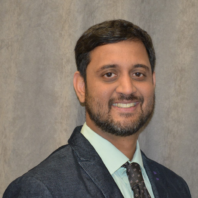
Ananth Kalyanaraman
Director
Boeing Centennial Chair in Computer Science